Yorba Linda highlight
Historic citrus
Yorba Linda was founded in 1907 as a citrus-growing center, with the first lemon and orange groves planted in 1910 and a thriving agricultural economy that lasted through the Great Depression and World War II.
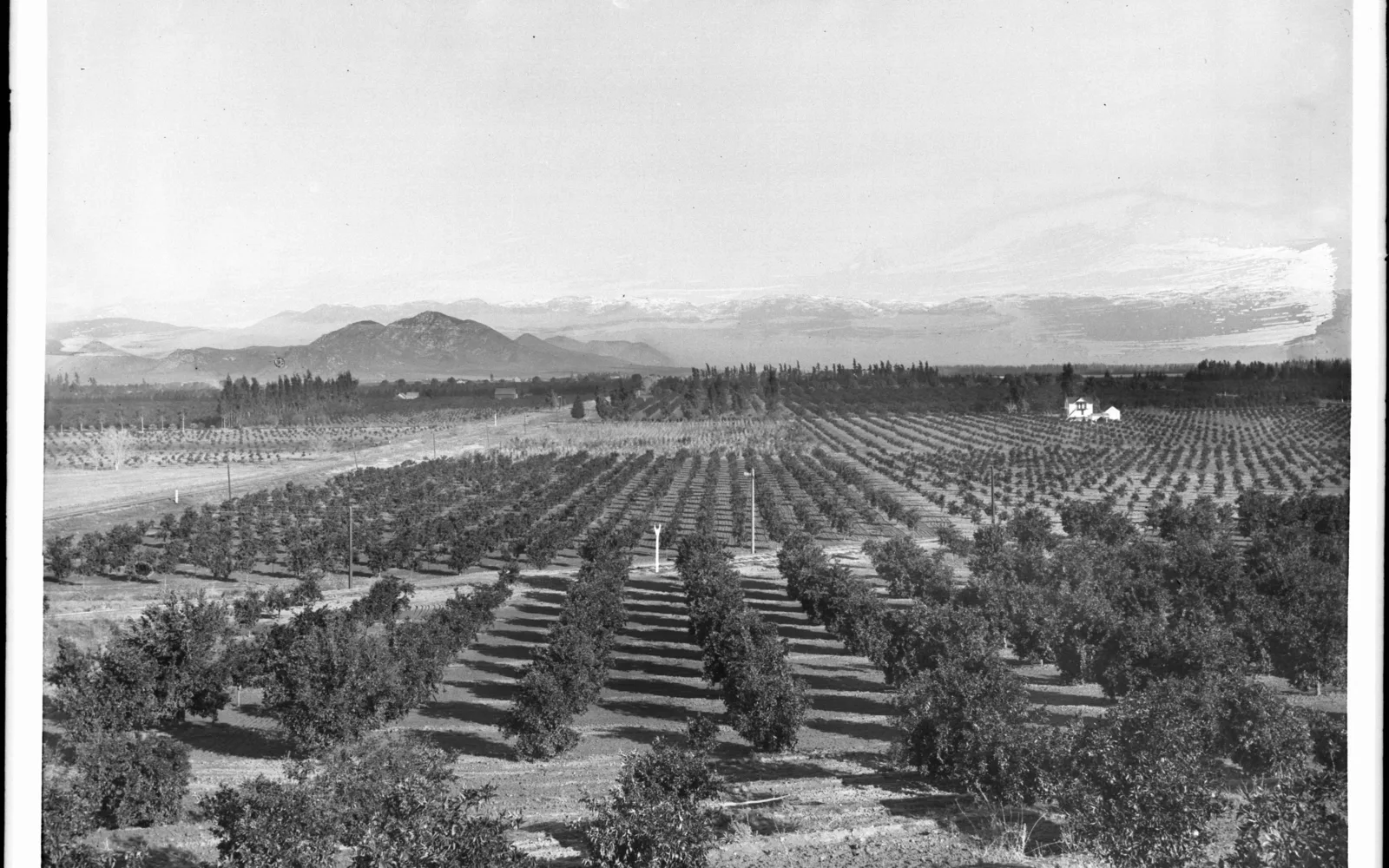
When the Janss Corporation subdivided the former Yorba lands in 1907, they named the new town "Yorba Linda" by combining the surname of the original Spanish land-grant family with "Linda," Spanish for pretty. The first residents arrived with an idea: to plant citrus in the Ramona loam soil, which had a clay subsoil that held water well. The first lemon and orange groves went in the ground in 1910 when the population was less than 50 people.
By 1912, the Yorba Linda Citrus Association was founded to represent the growers, and the town received its first post office the same year. The Pacific Electric Railroad line from Yorba Linda to Los Angeles gave growers an efficient route to major markets, and two packing houses were built adjacent to the railroad station, becoming the economic and social center of the growing community. Agriculture—citrus, avocados, tomatoes, and cabbage—remained the backbone of the economy through the Great Depression and World War II, and by the 1920s, the population had grown to over 300.
That agricultural heritage shaped Yorba Linda into a place where people plant themselves and build for the long term. Land, groves, and homes passed through generations as part of a plan to sustain a family over time. Modern households still carry that long-term thinking: they build homes they intend to stay in, invest in their children's futures, and want to know that if something happens to them, the people they support will be able to keep the life they've built together.